













HI! This page is a heavy work in progress!!!
About





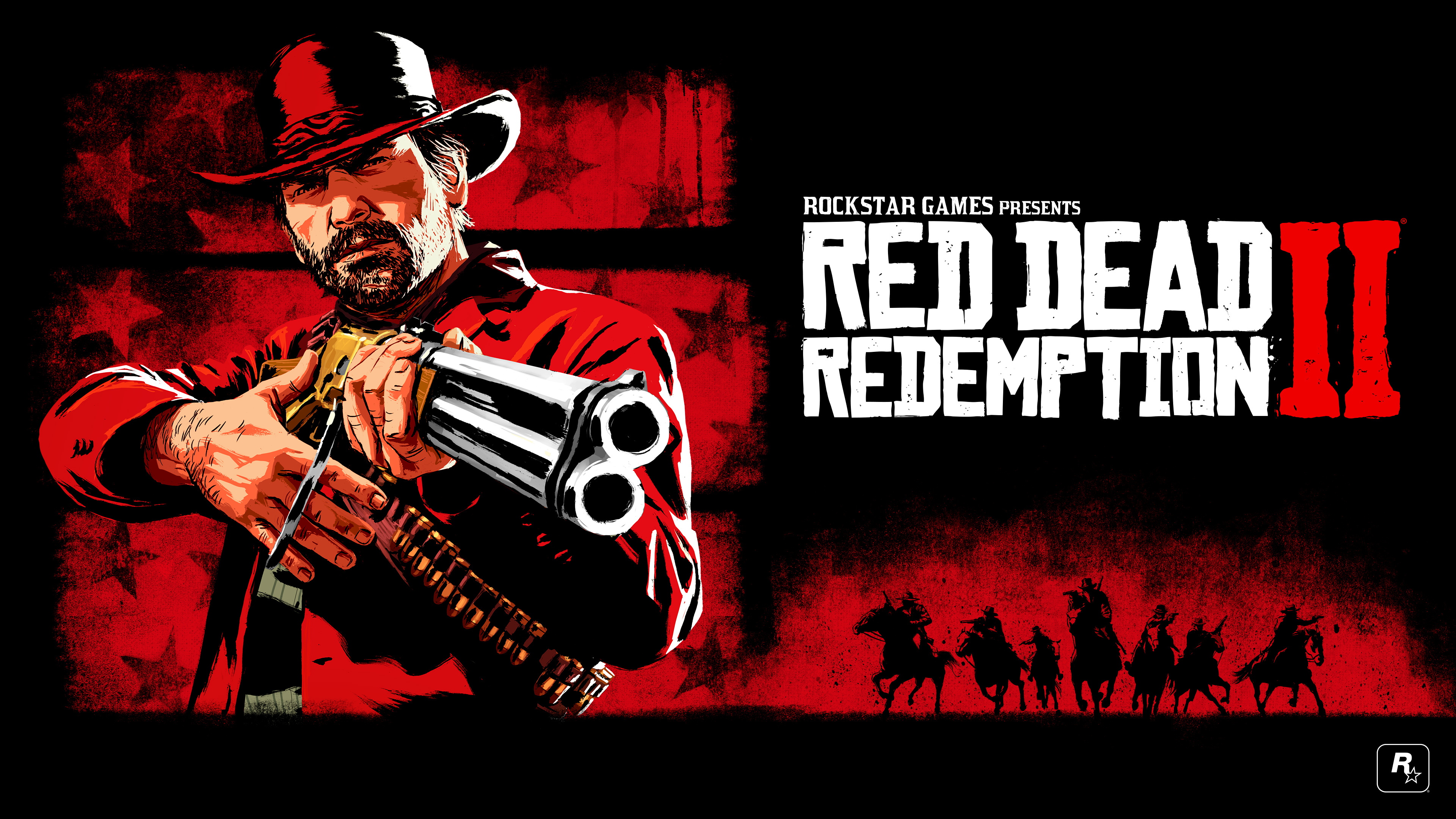
Red Dead Redemption 2, released in 2018, is the narrative prequel to Red Dead Redemption, released in 2010. The game spent 17 years in development under Rockstar Games. At the time, it made waves for its excellent visuals, interactivity, environmental details, character acting, and incredible narrative. Several years since its release, it still holds up as one of the best triple-A video games ever released.
Gameplay

The game's actual content is estimated between sixty to a hundred hours of gameplay, during which you can watch brilliantly executed cuscenes featuring performance capture and graphic clarity heretofore unrivalled in the video game industry. Or, you can jump right into the bang-bang-shoot gameplay Rockstar Games is known for, heedless of the high drama that propels it as you pursue wealth and hyperviolence. You can also simply take your time to study each and every plant and animal, bond with your horse (or, horses), meet intriguing and entertaining strangers, or participate in one of the most in-depth fishing mechanics ever made for a game ostensibly NOT about fishing. And I haven't even TOUCHED the clothing and hair customization systems yet. The real kicker is, most people do a little of all of this. There's no RIGHT way to play this game. Each and every detail is so well thought out, each contingency accounted for, it feels like you can actually do anything in this game. There's an honor system implemented into rdr2 where each action you take will either put you into the shoes of a good-hearted but misguided outlaw trying to save his family and redeem himself for his checkered past, or a man so convinced of his own evil there's no other way he knows how to interact with the world outside of violence. There's so much nuance in everything about this game that it's managed to keep me riveted after over 5,000 hours and (at time of writing) seven years. I STILL haven't gotten all the story mode achievements for my ps4 version.
All of this is NOT to say that you should be intimidated; far from it. Red Dead 2's introduction to its world doesn't hold your hand, but features are introduced organically in the gameplay itself, so when you saddle up and head into the world outside of story missions, you're already well equipped to handle it.
Narrative
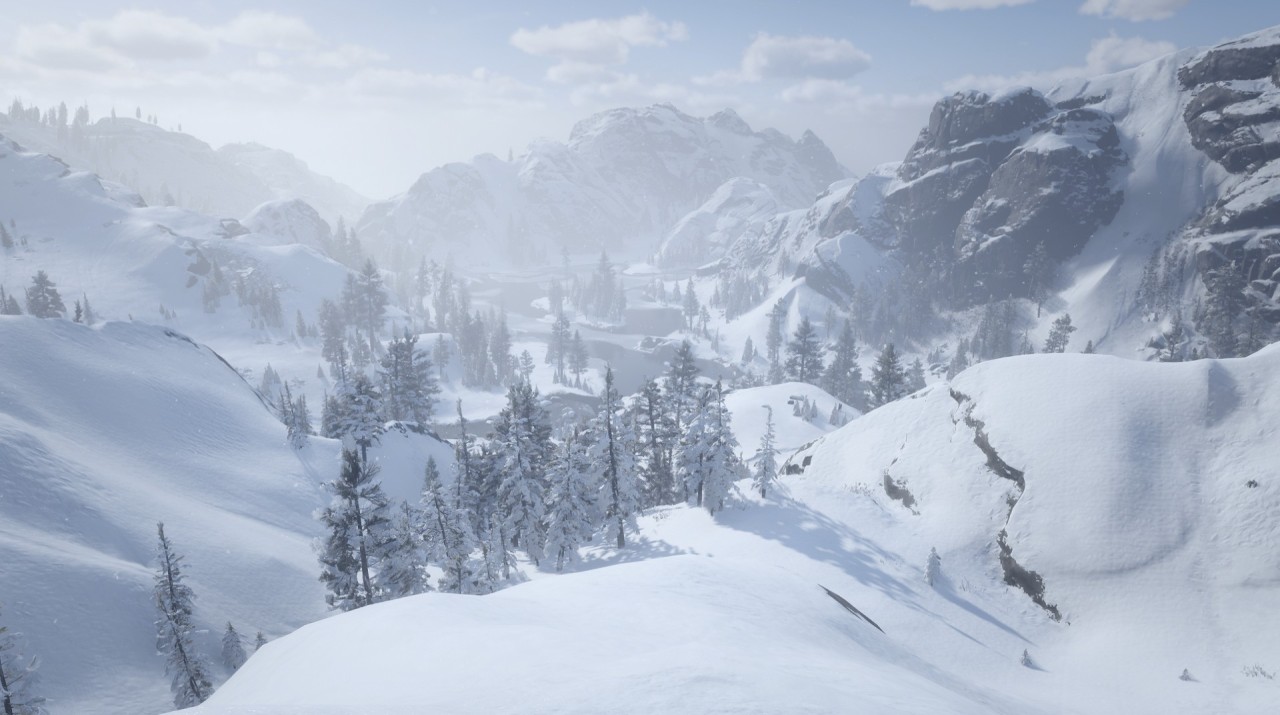

Its narrative is divided into six chapters and an epilogue, with the opening chapter working to orient you in the world, and introducing you to playing the role of Arthur Morgan, the "enforcer" in the Van der Linde gang. The game opens in a howling blizzard, into which the gang has fled from the law after a heist gone wrong. We don't get many details except the group is composed of a surprising hodgepodge of misfits, including women and a child. Everyone is struggling to survive, and as you progress, you learn to ride your horse through waist-high snow to meet up with your other gang members and find shelter. You learn bits and pieces here through conversations on horseback, the chapter progressing slowly as you rescue a newly widowed woman, Sadie Adler, from a rival gang, go hunting with a mixed race native/black man, Charles Smith, and make plans to rob said rival gang before departing from the harsh snowy mountain. The chapter is one long tutorial that serves the dual purpose of introducing you to the game's controls and features as well as the context that the rest of the narrative is about to unfold from. Chapter one ends in a train heist and the gang's exodus from the mountains in its wake.
Chapter two begins immediately after, with the gorgeous scenery passing slowly by as the gang members hold conversation with each other in a way that feels so naturalistic as to make you forget you're playing a game in the first place. Arthur and his fellow gang members establish their new hideout camp at Horseshoe Overlook, a plateu with a sprawling view of the Dakota river valley below. It's when this chapter begins that the game really hands you the reins. You can explore camp, interact with everyone, craft tonics and ammo at a campfire, jump immediately into a few story focused missions, or saddle up and leave as soon as you like.
I'm not going to go too far into the plot, but Red Dead's story is a notoriously heart-wrenching tragedy interspersed with moments of genuine thrills, laughs, and awe that are difficult to explain without seeing for yourself. It's a meditation on mortality, the ephemeral nature of life, and the hole you leave in other people when you're gone. Over the course of your game, you're with Arthur for every moment, you watch him as the story changes who he is, forces him to confront the things he's done and the things he's going to do, and you watch him decide to choose love and kindness over loyalty. You watch this man as he gets news that changes his perspective on EVERYTHING, and no matter your playstyle, his story only has one end. (Metaphorically. The game has four slightly different endings.)
And that's really the heart of the story right there; the end. As soon as you get that news, you know how this ends. The moments in between, your adventures lose their lightheartedness and whimsy and the tone shifts to a deep melancholy and existential introspection. You can choose to let Arthur extend the hand of mercy and help the people you encounter, trying to ease the weight of his past sins, or you can choose to save the effort and focus on helping Arthur and the few in his inner circle. You can decide if he takes that news of his imminent death and makes the last of his days worth it, or if he's going to keep going as he is until the very end, a victim of the same violence that he enacted on an innocent stranger.
Characters
Red Dead's gut-punch narrative wouldn't be possible without its absolutely incredible character acting. The "main" cast of characters in Red Dead Redemption II is pretty large compared to Red Dead Redemption, where we only had John Marston and his family along with various side characters. For rdr2, we've got an entire camp's worth of NPCs to interact with and get to know more about on a daily basis; about twenty in total, plus a comprehensive list of plot-important side characters that show up a few times. Protagonist and player character Arthur Morgan, played by Roger Clark, is the obvious standout amongst all of them.
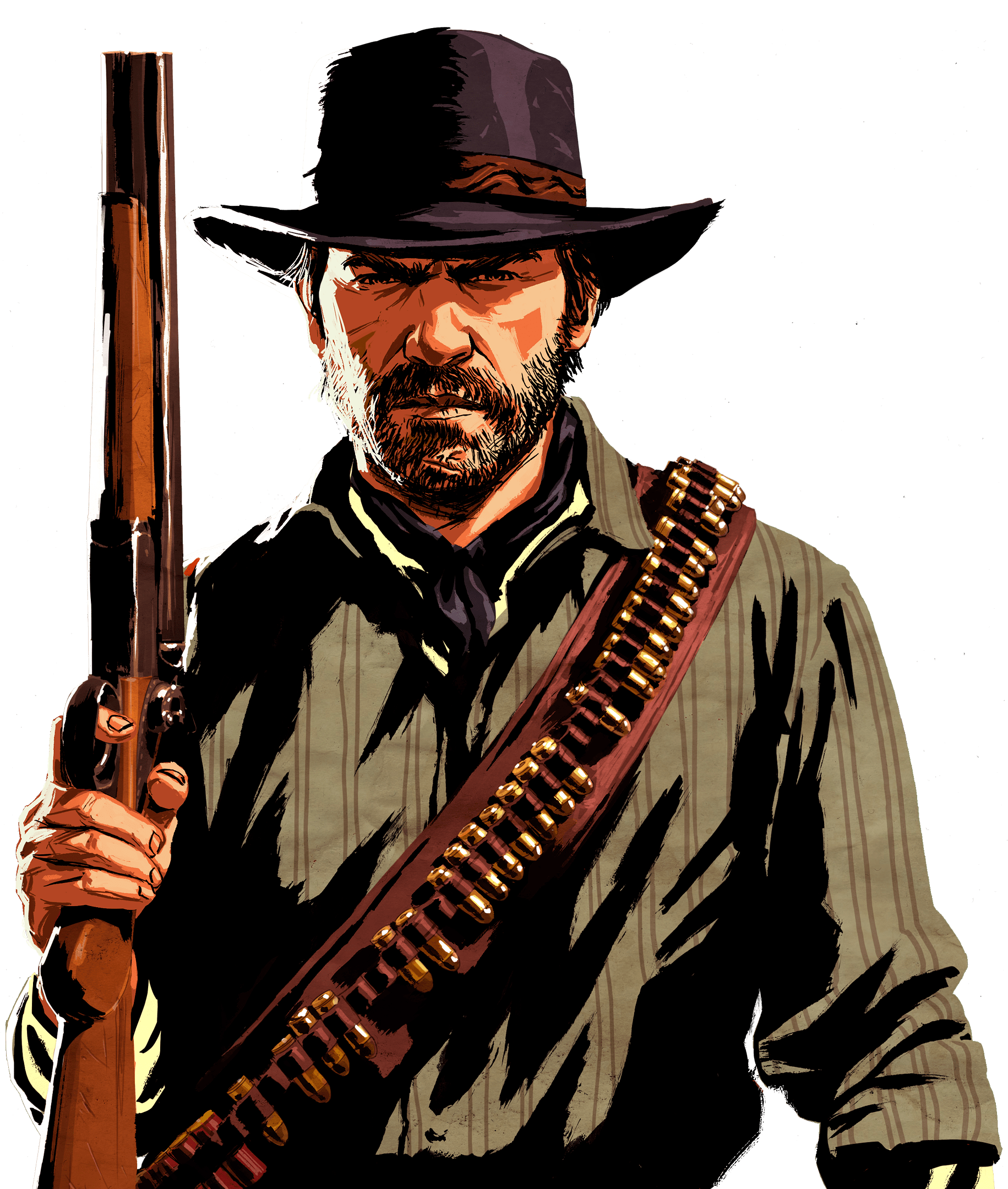
Arthur Morgan
Roger Clark's performance as Arthur had to walk a fine line for such a massive title; his personality had to be expressive and distinct enough to be believable as his own character within the narrative, but fluid enough to allow for player autonomy in decisions that account for honor level. In the end, I think the writers and developers managed to pull off the honor system and its interplay with Arthur's personality almost flawlessly. Regardless of playstyle, Arthur Morgan FEELS like Arthur Morgan; sarcastic, rough-and-tumble, loyal to a fault, but with an intriguingly low sense of self worth. His journal also offers a fascinating glimpse into his inner thoughts; reading through it as you progress in the game, you can see his internal conflicts about the people around him, the decisions he has no choice but to work with, his past romance, his deep regrets, and his wavering loyalty to his father figure/mentor Dutch Van der Linde. With his health failing, it's all he can do to mitigate the damage that the gang does and try and hold fast to everything that's rapidly slipping through his fingers.At risk of sounding like a broken record, his character arc over the course of the story hits so hard as a meditation on the impact of your actions on the people around you. There's a scene near the end where he confides in a nun, Sister Calderon, about how he's doing. It's one of the only times he verbally acknowledges his condition, and the way his voice breaks over the two simple words
 "I'm afraid" had me and countless others shedding some tears. It's her response that's one of the most memorable in the game. She says, "Take a gamble that love exists, and do a loving act". In a high honor run (which I consider more "canon"), he takes her advice to heart. He starts forgiving debt collections despite Dutch's insistance of profit over people. He helps strangers. He stops robbing innocents. He starts helping out the fictional native tribe, the Wapiti, when they're in trouble. He forges closer bonds with his friends and his brother. He uses the last of his strength to make sure as many members of the gang get out alive as he can. He saves John and his family. Most of those people get to live another day because Arthur took a gamble that love exists. Fuck. It's been seven years and I still tear up about it.
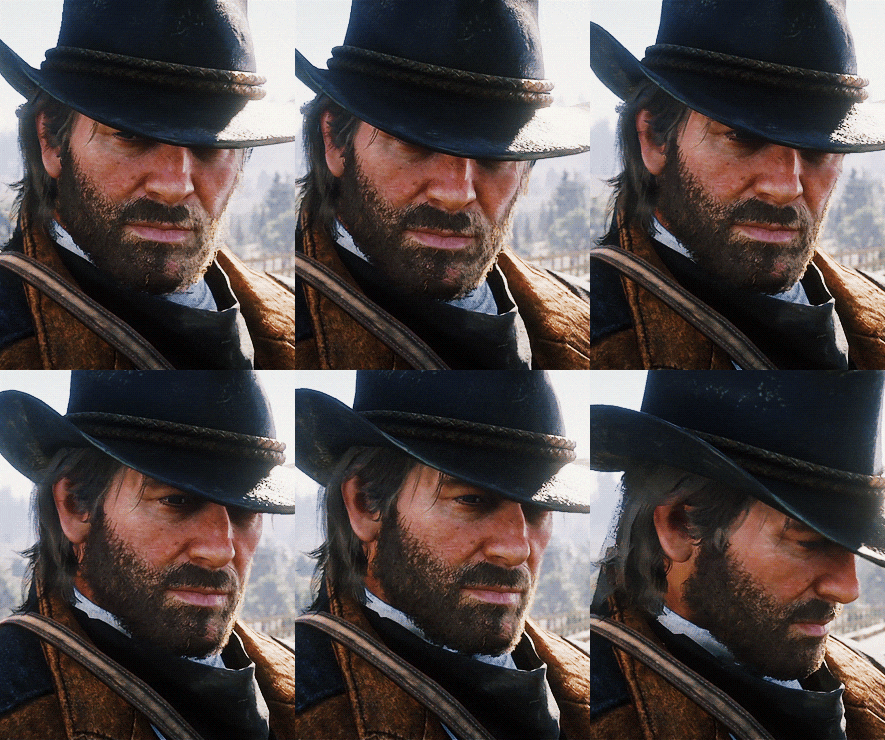
"Ah whatever :\"
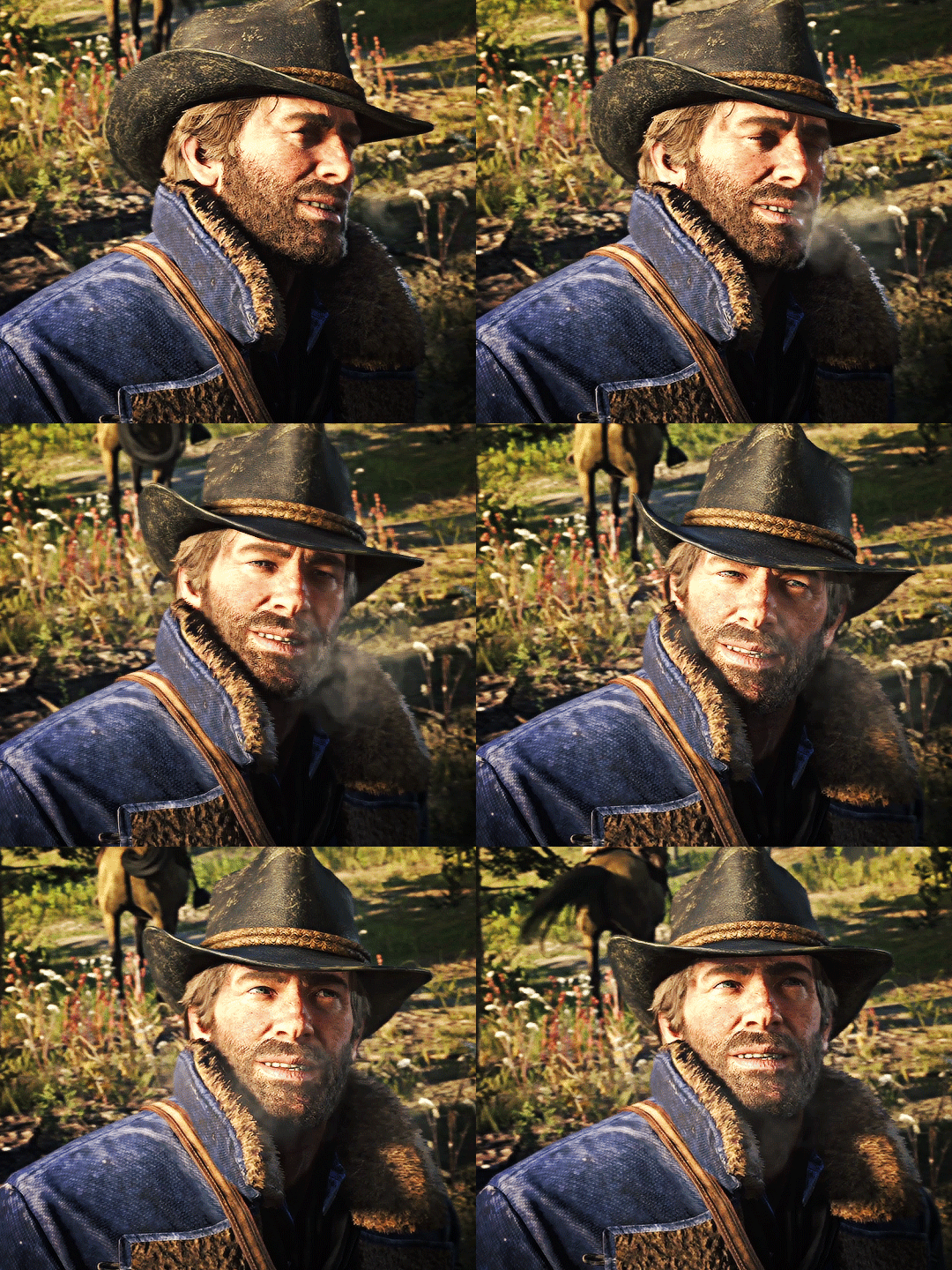
"Ah whatever :)"
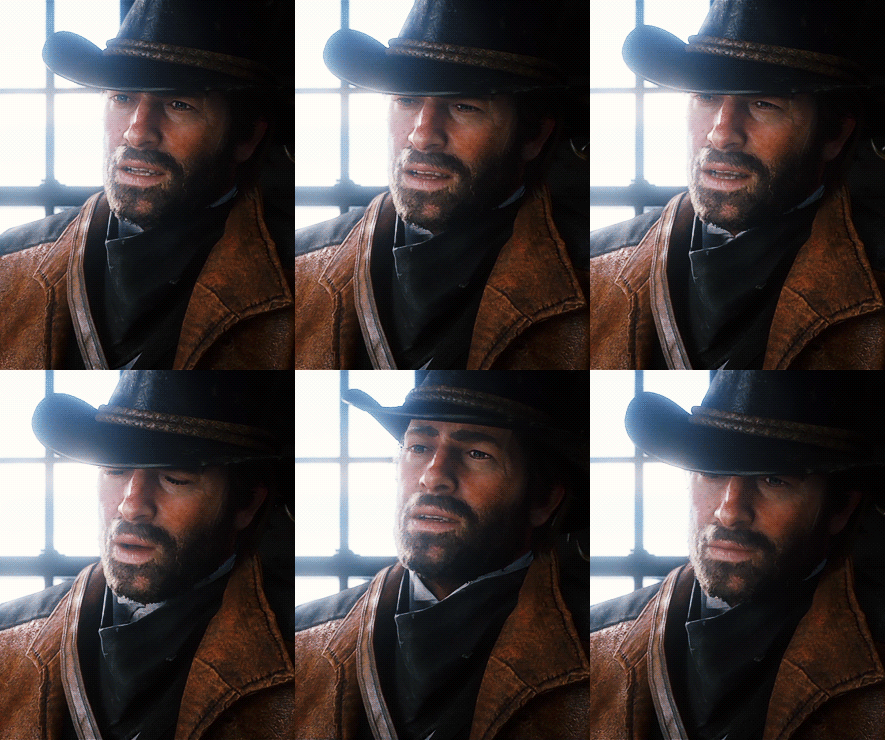
Arthur jawin' off
Dutch Van der Linde
Dutch is (arguably) the antagonist of rdr2, played by the fantastic Benjamin Byron Davis. As leader of our rag-tag gang of outlaws, his actions and his decisions are what drive the story forward before it even begins properly. As the story opens, you get glimpses of the charismatic and ambitious leader he can be, and you gain a real appreciation for the way the gang members respect him as a paragon of righteousness and wisdom. It's also plainly obvious how fondly he's regarded by Arthur, having established early on that Dutch had taken him in at a young age, taught him to read, and set him on the path he walks today. But mission by mission and decision by decision, you begin to see his character eroding, his choices becoming less tethered in reality, his need for MORE beginning to consume him and everyone he loves. You, as Arthur Morgan, can only helplessly watch on and try to mitigate the damage that he inflicts in the name of... Freedom? Righteousness? Ego? Dutch Van der Linde, by the end of the game, really HAS no driving motivation besides a relentless need to "prove" himself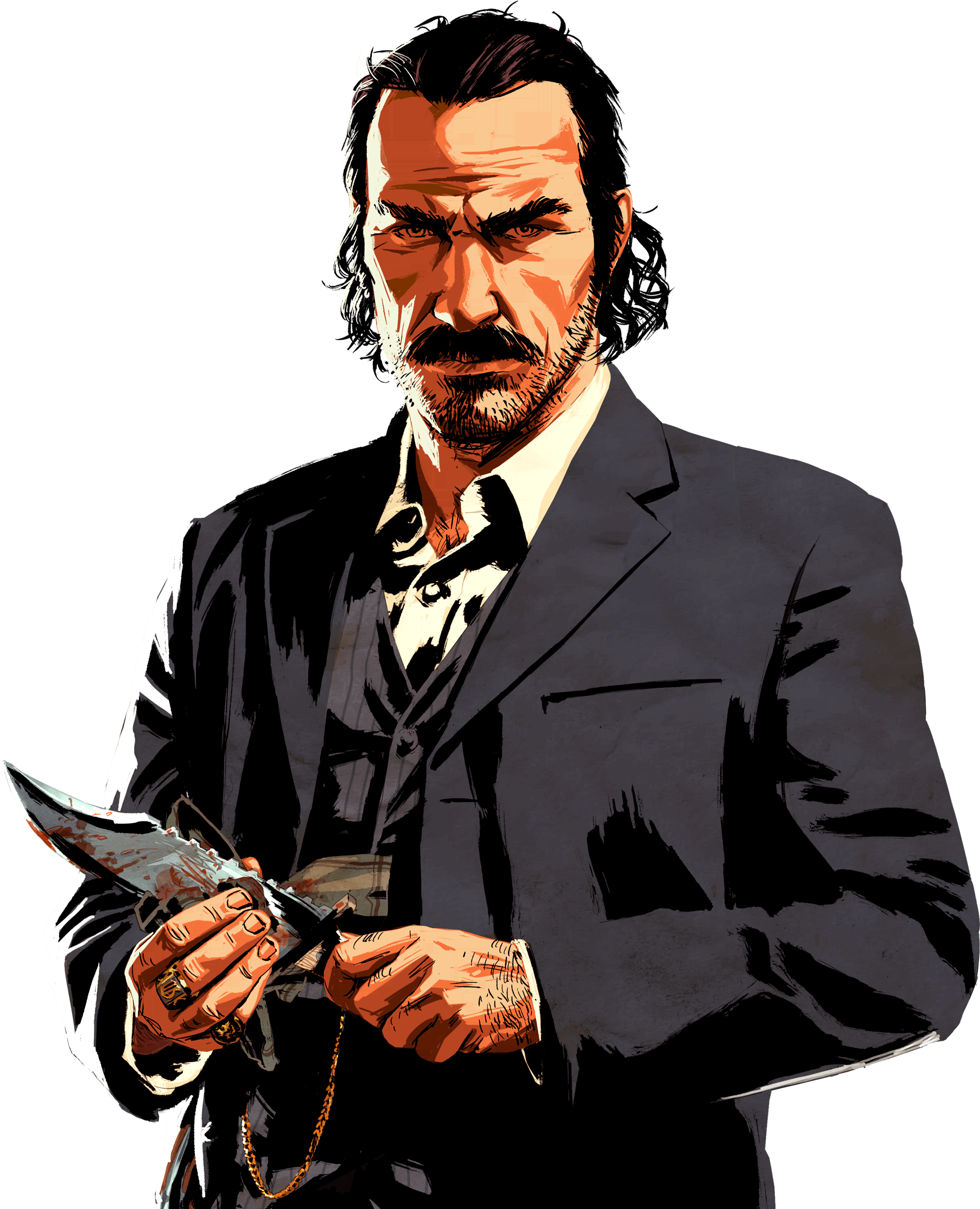 as he feels everything slipping away from him. No matter who he puts in harm's way, no matter how much innocent blood is on his hands, he's fundamentally unable to see that what he's doing is wrong. His ego is fuelled by fear. Midway through the game, Arthur, his son and his right hand man, begins to wither away before his eyes, and he can't bring himself to look. To look is to admit defeat. So he doesn't. He turns away from his son, time and time again, until he leaves him for dead one last time; unable even then to admit his own failures.
Obviously, this is a character I've spent a long time having complicated feelings about. He's like a narcissistic mother to me. I could honestly go on about individual facets of his character but I'm trying to keep these short-ish. Dutch Van der Linde is one of the most compelling and upsettingly realistic characters I've ever had the privilege to witness on screen.
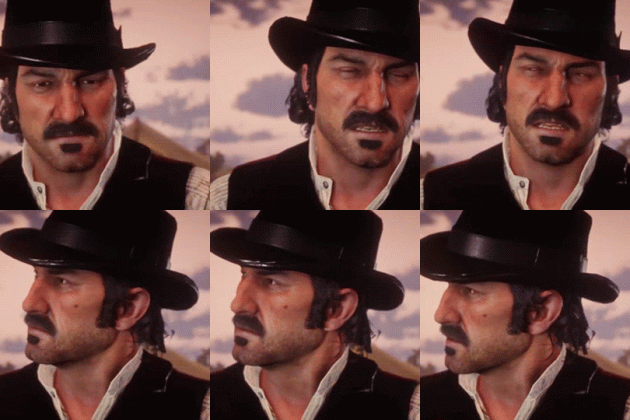 Angrey >:(
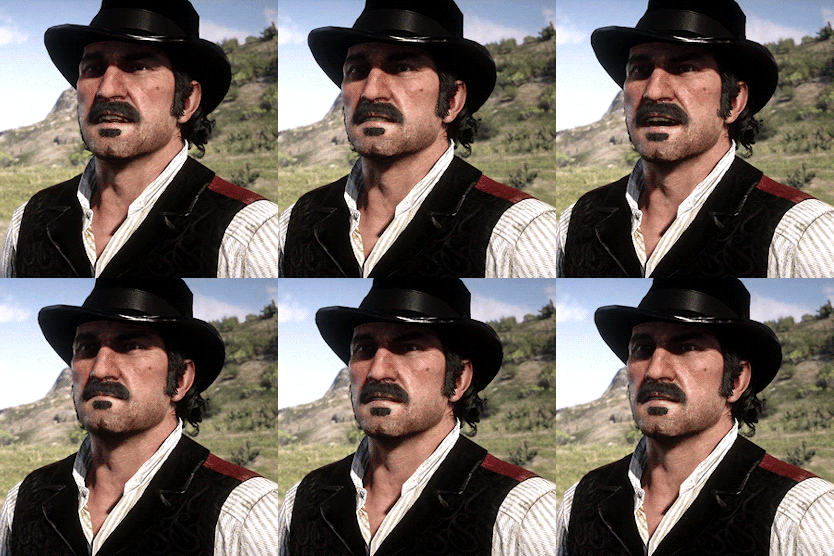 He had a PLAN.
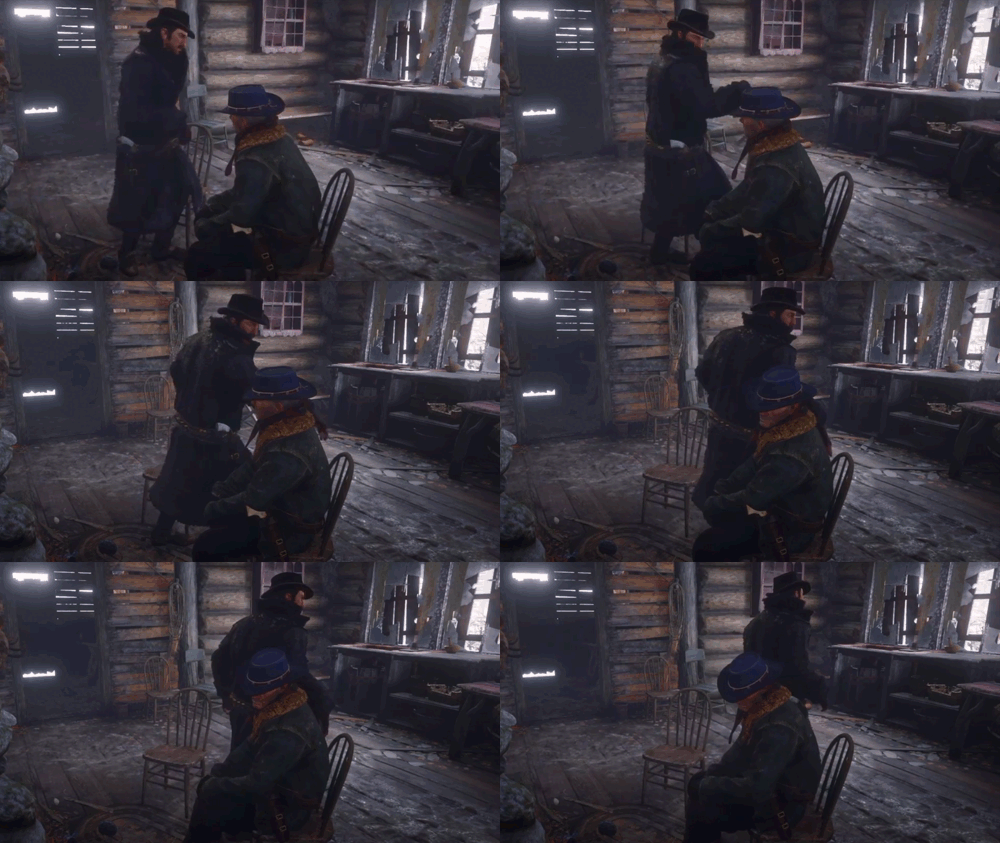 A good friend?
Sadie Adler
Sadie Adler, played by Alex McKenna, is a character introduced to the gang at the start of the game as a woman newly widowed and consumed by grief and trauma. Throughout the course of the game, she goes from a despondant woman beaten by her circumstances to someone who wants to do right by the gang who saved her, an active member of the gang and the writer of her own story. She can be seen in the background of chapter 3 helping the camp cook, Pearson, with his duties, but she soon makes it absolutely clear that she won't be forced into domestic labor like many of the other women in camp. Testing her mettle with Arthur against a rival gang, the Lemoyne Raiders, Arthur and the player gain a new respect for her skill with a gun and her burning hatred of her enemies. Her fury really is her defining characteristic in the time after chapter 2; she's a red-hot firebrand who kicks ass and takes names. The grief she went through metastesizes into white-hot fury directed at the O'Driscolls who ruined her life. She's so consumed by her hatred and her vengance that by the end, she feels like she's a ghost of the person she once was. After her vengance is done, and the gang is all but gone, there's nothing left for her. She takes up a risky career in bounty hunting post game,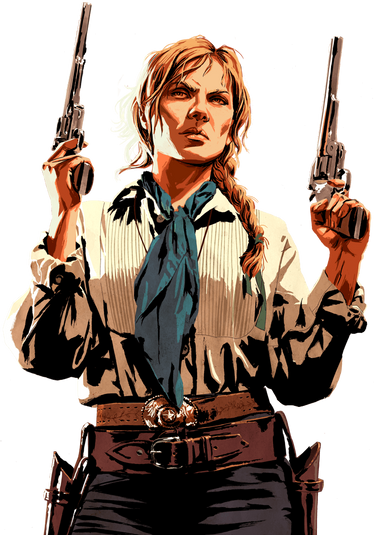 travelling all over and taking on jobs nobody else does because she's no longer afraid to die. But despite everything she endures, she's still a fundamentally kind person. She and Arthur have a genuine respect for each other that's evident in almost every interaction post-chapter 5, and when his health is clearly failing and he's pushed to the breaking point, she's there to pick up the slack. Her fondness and compassion for the people close to her juxtaposed with the traumatized fury she fosters make her such a stunningly compelling character.
I'm really not one to ask for sequels or spinoffs, but there's so much to Sadie as a character that she really really deserves a spotlight in another title. In my first playthrough I thought she was going to be the secondary protagonist (taking the place of John) and I was kinda disappointed when that didn't happen. Sadie DLC please. Please rockstar. Sadie DLC. I'm begging you.
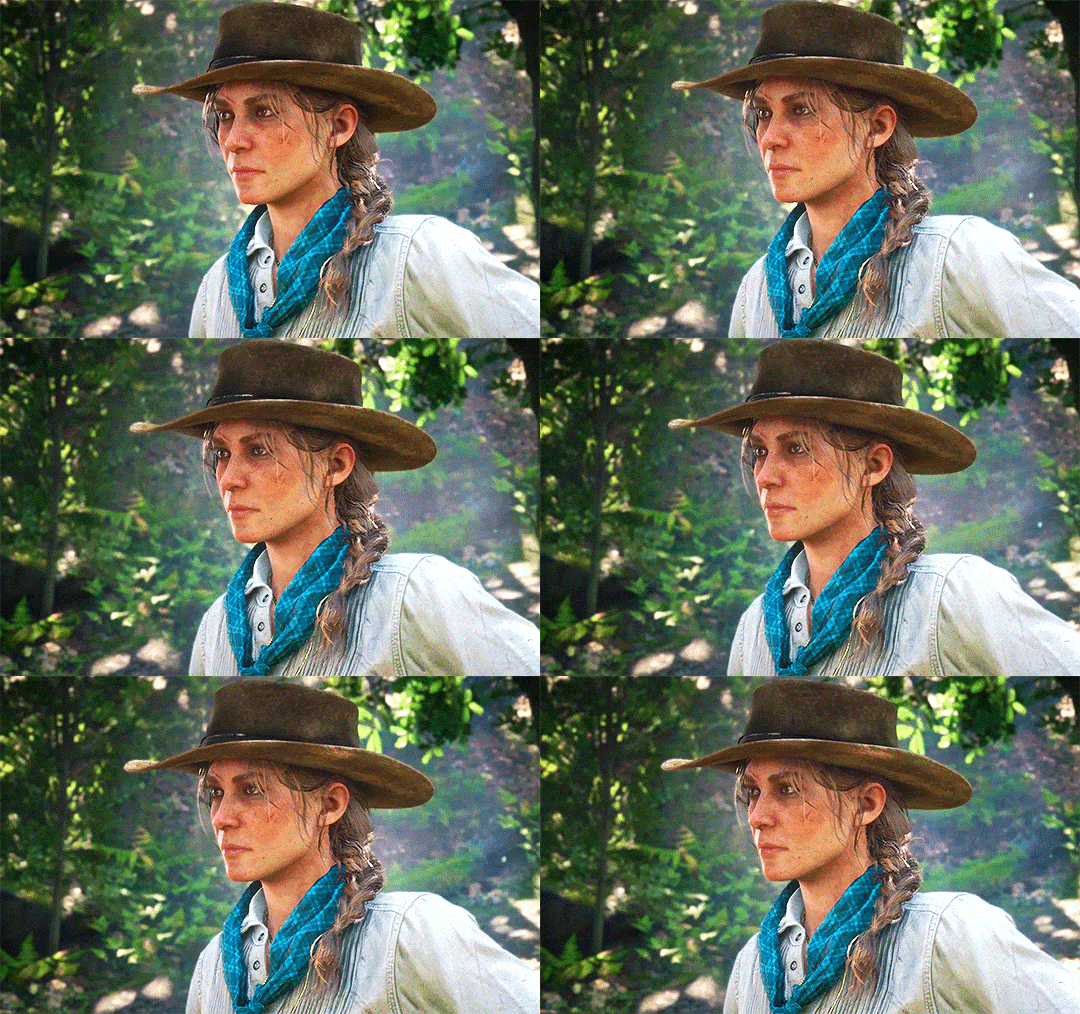 Thinkin' up a storm
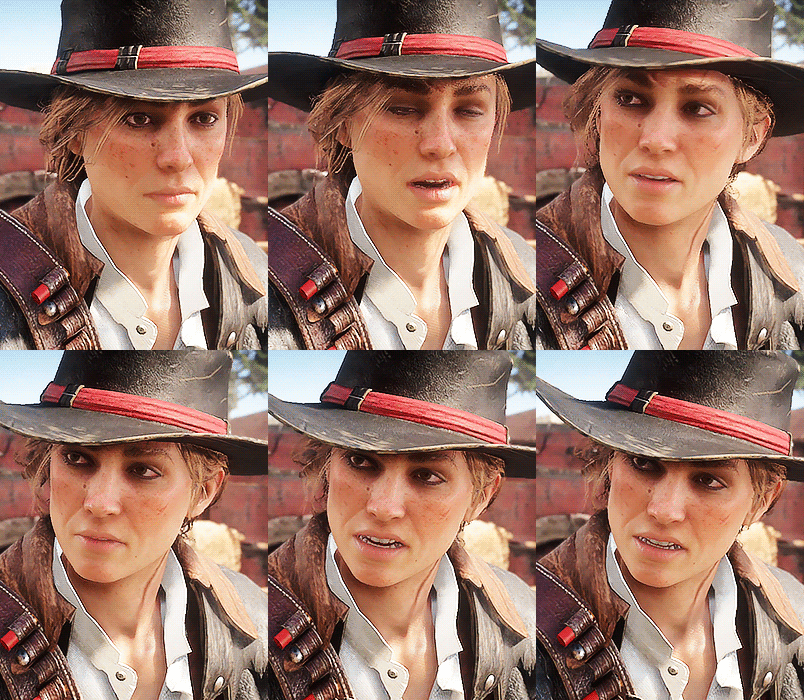 Talking over the plan
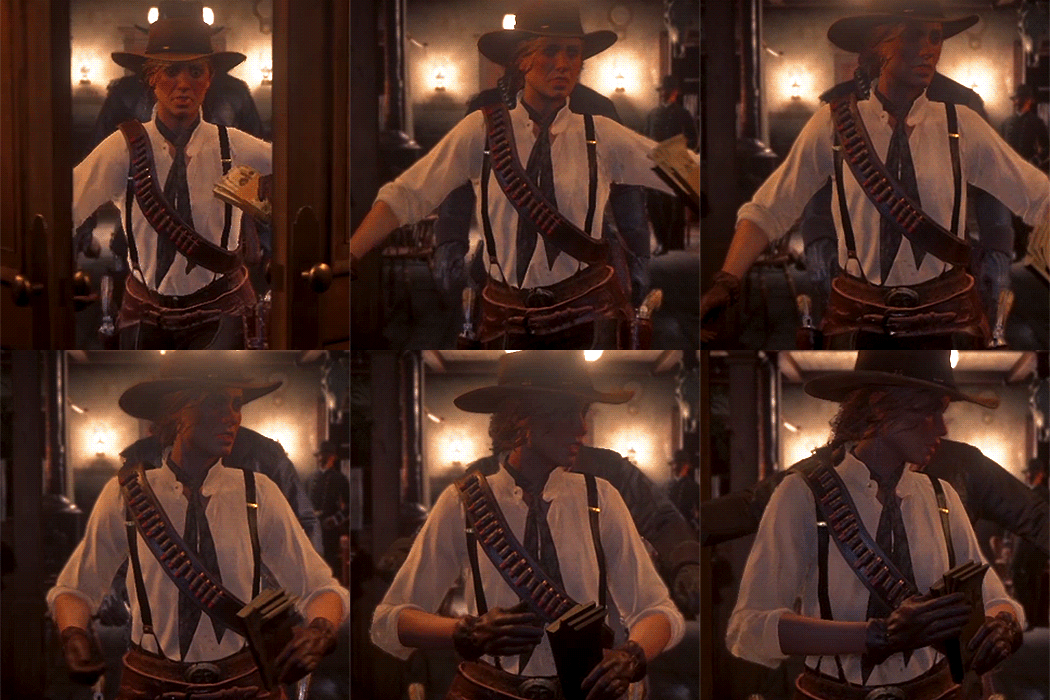 Swagger(tm)
Charles Smith
Charles Smith, played by Noshir Dalal, is a member of the Van der Linde gang introduced in a hunting mission with Arthur in chapter 1. He's a soft-spoken character who clearly values silence, but the entirety of his time spent with Arthur, he talks about his past, his connections with his native mother and his black father, and his values, and he seems to take genuine interest in what Arthur has to say. Arthur seems to be one of the few members of the gang he really opens up to, and Arthur gladly reciprocates. Although his character arc is given less development and spotlight compared to the main characters', he goes through the downfall of the gang just the same as they do. After chapter 4, he helps the weaker gang members, spends significant time helping the the Wapiti tribe, and lends Arthur extra help whenever it's needed. He shaves the sides of his head in a show of grief when he gets news that Arthur is likely dead, but when they reunite after chapter 5, they share a hug in a touching display of affection. His kindness is always evident, despite his quiet and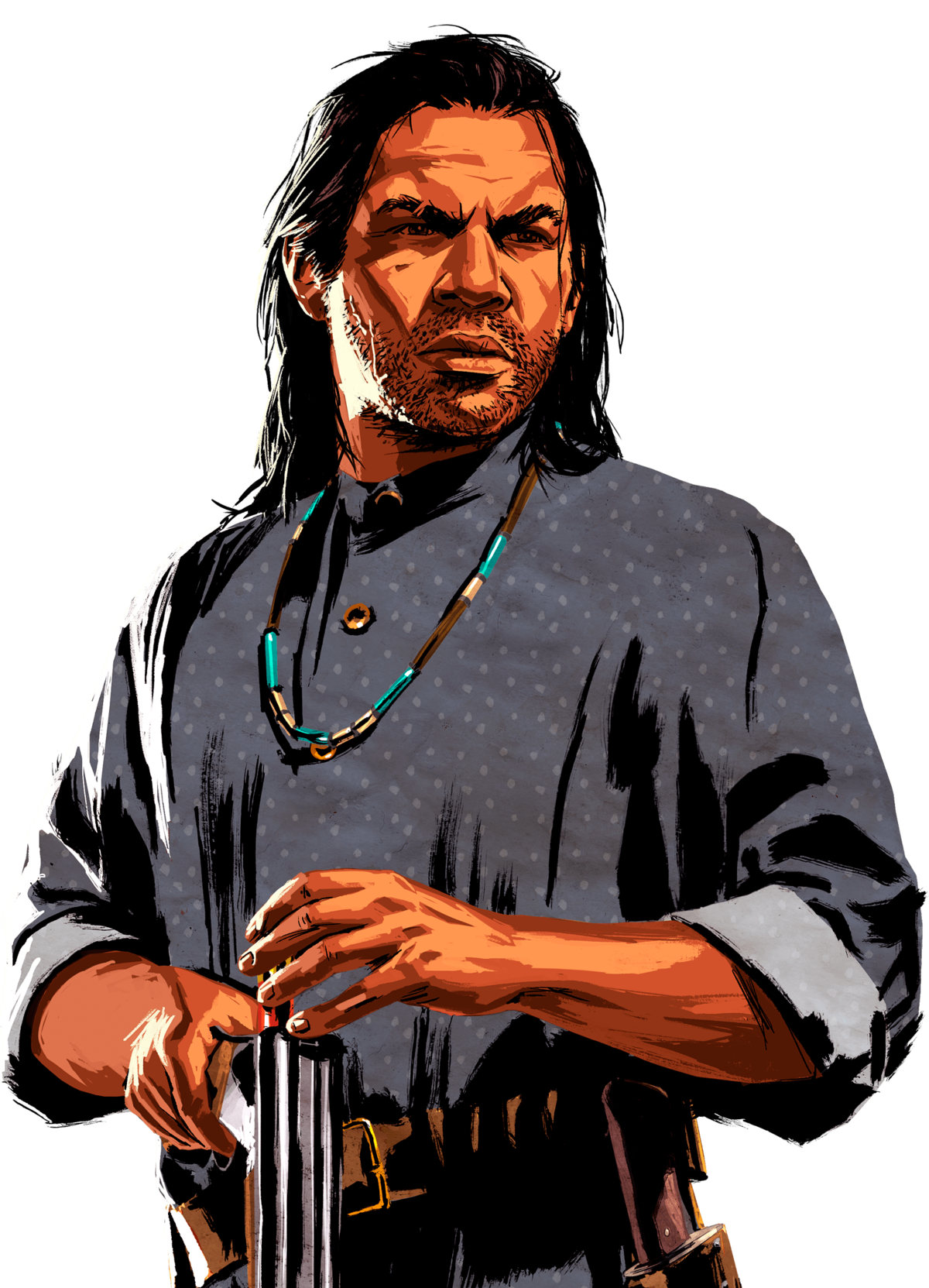 purposefully intimidating demeanor. He's a character that's young, but has lived such a harsh life that he's made to feel like he was only put on the earth to hurt others, and to suffer himself. His friendship with Arthur and his comraderie with Sadie and John are really the core of his character, someone whose moral compass is unwavering, and whose bonds of friendship are unbreakable.
There is definitely something to be said about the "strong stoic native character" archetype in fiction, but the writing in this game rounds Charles out from a stereotype into a believable person who's spent his life in solitude and fosters his only connections to his mother and her culture in any way he can. I really do wish we'd gotten to know Charles more, given how he's a paragon of strength that Arthur leans on & vice versa. His surviving to the epilogue and meeting John feel so good after seeing the strife that Charles suffered in chapter 6. We never get to find out, but I hope his story ends happily whever he winds up.
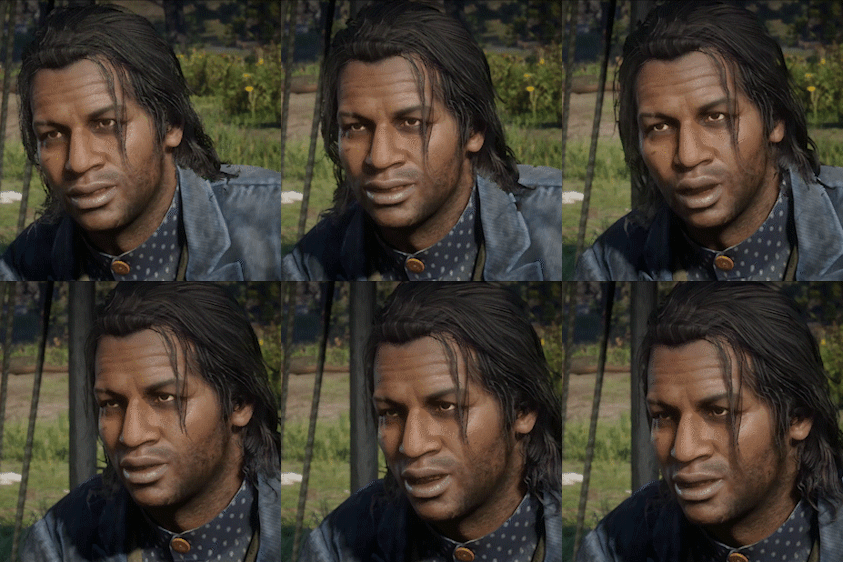 "The greatest of gifts"
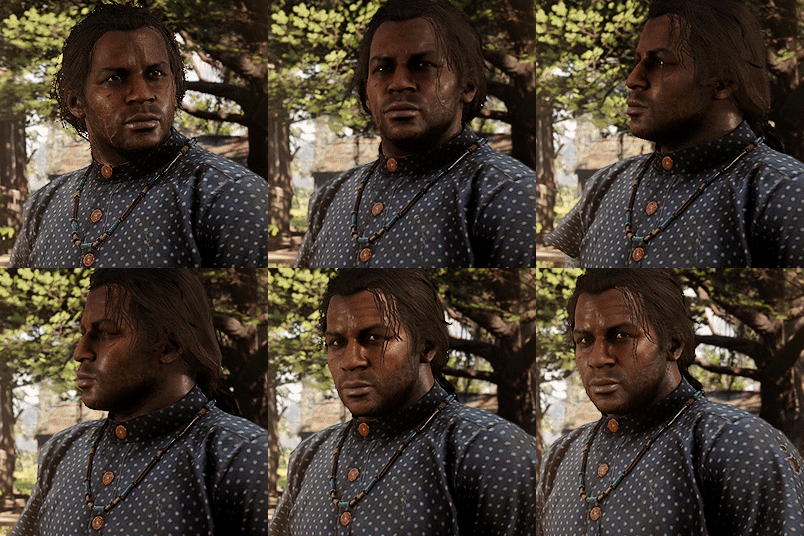 Charles hearing some bullshit
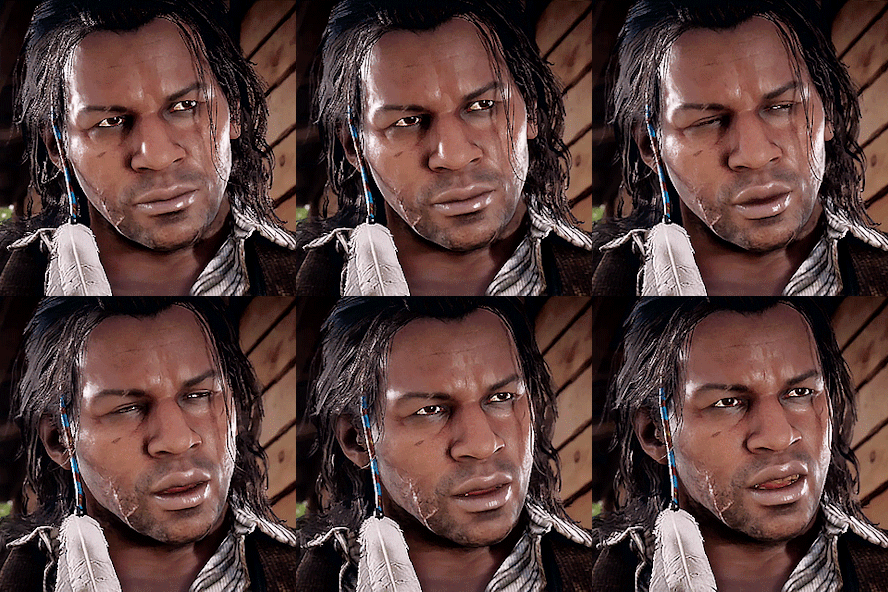 Talking w Sadie and John
Supporting Cast
OTHER GANG MEMBERS
There are nearly 20 members of the VDL gang, and this game being as large as it is really helps if you're someone like me who likes to really get to know your companions. [WIP]Cinematic Parallels
While Red Dead Redemption is largely inspired by tropes from spaghetti westerns, Red Dead 2 draws its inspirations from a variety of "revisionist westerns" as well as contemporary westerns and real-life history. I'm only a recent fan of the western genre, so I've undoubtedly missed a few things in this section. To follow are a few personally observed parallels, as well as things fans have pointed out through the years.Beginning with the mission titled "Who the Hell is Leviticus Cornwall?", rdr2 puts its best foot forward with a reference to the critically acclaimed 1969 film, "Butch Cassidy and the Sundance Kid". This film is arguably one of rdr2's biggest inspirations, with references to particular scenes in multiple different missions. Game Rant published a great article on the parallels. In this mission, the gang robs a train owned by Leviticus Cornwall, a thinly veiled reference to E.H. Harriman, then owner/tycoon of the Union Pacific Railroad. The train robbery plays beat-for-beat like the film, which in turn adapts the purported events of history.
But beyond simply the cinematography, as Tore C. Olssen notes in his book "Red Dead's History: A Video Game, an Obsession, and America's Violent Past", cues and real events of the lives of Robert LeRoy Parker ("Butch Cassidy") and his gang, the Wild Bunch, were used as plot points and metatextual framing for the events of the game. Most obviously, casting the "villians" of the story as the real-life Pinkerton Detective Agency to hunt down our protagonists, much as they did to Butch Cassidy and the Wild Bunch. The parallels continue through the events of the game, with Dutch Van der Linde acting as the "brains" of the operation and formulating a plan to leave the country after the law begins to kettle them in. As the pressure mounts, the Pinkertons deploy more and more heinous tactics to catch their targets, up to and including kidnapping and point-blank execution, much as they did in their pursuit of the real life outlaws. The game makes another nod to the Pinkerton agency's legacy of violence in dialogue during the mission "Just a Social Call", where the Pinkertons are deployed through the mining settlement of Annesburg to quell worker unrest and engage in (what one would assume to be) union busting.
In another train robbery mission, the game makes a grand reference to the 2007 western, "The Assassination of Jesse James by the Coward Robert Ford". With cinematography a nearly 1:1 shot-for-shot re-render, it stands as one of the more dramatic moments ingame.
Red Dead Redemption 2 is peppered with little references in missable instances, too: During the jailbreak sequence of "Blessed are the Meek?", a reference can easily be made to the 1967 spaghetti western "Death Rides a Horse" starring Lee Van Cleef, in which he uses a steam donkey to bust through the bars of a jailhouse. In Big Valley just north of Strawberry, you can find a corpse underneath a dead grizzly bear in a nearly identical position to Leonardo DeCaprio's character in The Revenant (2016) had it turned out a little differently. You can also find a man bearing a striking resemblance to Nosferatu from the 1922 film of the same name, and listening in on (anachronistic, for the record) KKK banter during their nighttime gatherings reveals their ranks are incompetant and stupid to a comic degree, very similar to their depiction in 2012's Django Unchained.
Django Unchained is also a major inspiration for the setting and cinematography in Chapter 3. The most obvious parallel being the mission "Blood Feuds, Ancient and Modern", where the gang rides out to an ex-slave plantation in pursuit of Jack Marston, a 4 year old boy who'd been kidnapped by the plantation family, the Braithwaits. The gang rains hell down on the manor and leaves it to burn in a cinematic moment a la "Django Unchained", but instead of the film's cathartic ending, this burning manor signifies another turning point in the story of the Van Der Linde gang, and it's not one for the better.
There are undoubtedly more parallels to the long history of the hollywood western in Red Dead 2, but these are the few that I can definitively back up. For further discussion on these parallels, both cinematic, historic, and tonal, Screen Rant has written a couple great ones:
"Red Dead Redemption's Best Movie References"
"How Red Dead Redemption Embodies Cinema's Greatest Anti-Westerns"
And probably the most definitive reading of Red Dead Redemption 2 through a historical lens, I can't recommend Tore C. Olssen's book "Red Dead's History: A Video Game, an Obsession, and America's Violent Past" enough.
RDR2 and Indigenous History
While I can definitively say that Red Dead Redemption 2's script has one of the most sympathetic portrayals of Native Americans in any mass media property, its depictions still miss the mark in a few ways. Most obviously, in its refusal to name its sole native tribe.Rockstar games have a tumultuous relationship with names, especially with brands, cities, and states which may not wish to be depicted by a studio so famous for crassness and irreverence. On one hand, it's unsurprising that the "Wapiti tribe" is named Wapiti instead of Lakota-Sioux; given Rockstar's history as well as rdr2's own map where US states are squashed, stretched, condensed, and simplified and given their own fictional names, "Wapiti" fits right in. On the other hand, this follows on the coattails of three centuries of media depictions of native americans which don't care enough to name which specific nation they're depicting. American mass media tends to invent native tribes whole cloth from a mixed bag of centuries-old cliches, one or two languages (if you're lucky! (Usually Navojo, Ojibwe, or Cherokee.)) and character and costume designs that range from Spirit Halloween racial caricatures to nonspecific "tribal" regalia you can find on Etsy. While rdr2 certainly deserves kudos for doing the bare minimum in NOT making caricatures, it still falls into the trap of just... Not calling their depiction of the Lakota people "Lakota". Hell, "Wapiti" isn't even a word that comes from the Oglala language family! It's from Cree and Shawnee meaning "white rump (elk)". If other characters can be Polish, Irish, or Austrian without needing to rename these populations, why does Lakota need to be danced around? The needless renaming is just another instance in the long history of Native American cultural erasure.
Although the game makes it clear that its world isn't 1:1 with historical reality, great care was taken to depict the correct western technology and settler fashion for the time period. While its fashion may be precisely dated and its technology largely passes muster, the same care for chronology isn't paid in regards to the Lakota's social and political struggles.
The year is 1868; The Fort Laramie Treaty has just been signed, and the Lakota people's home of the Black Hills is protected from western settlement "forever". The year is 1874, and Custer has just announced that there's gold to be found in the reservation territory. Spotted Tail, Red Cloud, and Lone Horn travel to Washington DC to plead with the then-president Grant to stop the settler invasion. Two years later, the US government has claimed the territory, illegally annexing the Black Hills in the Great Sioux War of 1876. The Lakota-Sioux death toll is estimated to be 250-400. It's now 1877, and Sitting Bull and 2,000 of his people flee to the Canadian border. Two years later, the Massacre at Wounded Knee kills 350, a majority women and children. Why, then, does rdr2 parallel these events so closely when the game is set two decades later? By 1899, the Ghost Dance spiritual movement is all but over. The Reservation Era is in full swing for the scattered populations of the Lakota nation. The land is already suffered the collapse of its gold rush. The fate of the fictional Rains Fall and his son is all but sealed, their actions playing out two decades late and their resistence an anachronistic echo of the actions of Sitting Bull and Red Cloud. Playing out the events of red dead 2's Chapter 6 is a jarringly inaccurate blip in a game that's been so meticulous in its worldbuilding that it sticks out like a sore thumb.
Speaking of sore thumbs, there's a missable sidequest in Chapter 2 you can play with Charles Smith. Bison hunting! Bison hunting? Why are there bison here in 1899? Much like the Lakota's struggles in Chapter 6, these bison don't belong in the year we're playing through, and the justification raises some eyebrows too.
Beginning in the mid 1800s as the USA's ongoing campaign of genocide against every single plains nation, bison were slaughtered en masse by settlers, the army, and even railroad tourists. While they once numbered in the millions, they were very nearly hunted to extinction. By 1889, there were only 541 bison left on earth. In the game's setting of 1899, that number had only marginally increased. Their presence in rdr2 is as startlingly out of place as the UFOs.
During Arthur and Charles' hunting mission, they come across corpses of slaughtered bison strewn across the plains. Following the trail to a couple of poachers, they defend their slaughter by saying, "we were paid to kill as many as we could, to make it look like it was indians." Assuming he meant the army was paying him, there's anecdotal evidence of people being paid to kill bison, but doing it to blame the "indians" is just odd. Why would these men have needed to defend their actions to a fellow white man? In the zeitgeist of the time period, bison were viewed as a nuisance species in the way of settlers’ farm prospects, it was just another way for the average white settler to enable the genocide of the plains nations. His defense implies that other white settlers would be outraged at the killings, but they were the ones that wanted that. The settlers were the ones DOING that.
As much as I loathe to pull the "it's not perfect representation but it's the best we've got!" argument, as far as mainstream media goes, Red Dead Redemption 2 did a lot more homework than its predecessor, and even many of its genre contemporaries. Although its historic timeline doesn't fit quite right, the fact that the Lakota people in the game held so much narrative weight and were given so much respect can't be lauded enough. For a genre that's had such a horrific history of indigenous cultural erasure, rdr2 as a western surpasses even most mainstream films. Is its relationship with indigenous history a healthy one? As a whole, yes. Incredibly so. Zooming in on minor story beats, character ideology, and comparing the timeline to the real world reveals cracks in the facade, but hell if it doesn't work well in the larger narrative of the game.
Why do I love it?

Red Dead Redemption 2 came out around the time a few of my other special interests were fading (rip my old ocs). My older brother came over during the holidays and brought his PS4 with a brand-spankin' new copy of rdr2 in 2018, and from the moment I saw the chapter 1 gameplay I knew this game was something special. The snow graphics were something I was absolutely blown away by; until that point, the most interactive environmental effects in a video game I'd ever seen was leaving footprints in the sand in pokemon (I'm not much of a gamer, sue me). And the HORSES? The obvious care and meticulous attention to detail that'd gone into motion capturing every feasible walk, trot, canter, gallop, and run? Their idle animations even?? And the fact that you can watch the muscles of their haunches and shoulders bunch with each step, and that mud and dust will accumulate on their legs according to where you've been riding, and the whites of their eyes showing when they're scared? Oh my god. This game knew how much of a lynchpin the horses would be for the wild west setting, and saying they knocked it out of the park is the understatement of the century. I was half paying attention to the cutscenes when my brother introduced this game, but when I saw those gorgeously rendered horses galloping through snow that moved like actual knee-deep snow? I was fuckin' hooked. I would've bought the game if it had stayed in the mountains for the whole runtime. (But it didn't!) So I bought it and it took me a month and a half to finish my first playthrough. Took me another two years to get a 100% playthrough. I'm still playing it and discovering something new each time!I honestly wish I could go back and play this game for the first time again. It's like nothing I've ever experienced; the drama, the atmosphere, the... Well, I've already gushed about it enough on this page. More personally, it got me through my early twenties with a nice community of similarly obsessed people on twitter/tumblr/discord. It propelled me straight into my interests in the fields of botany and ecology, reignited my love for country and blues, hastened my coming out of the closet, and has improved my ability to draw and paint tenfold. The game inspires me endlessly, and even though I'm not active in the rdr2 fandom anymore, my memories of the communities are fond and a little ridiculous.
Why do I love it so much? Why do I keep playing story mode seven years on? I think something about the way you can choose to play it at your own pace is a big factor. I'm not shy about the fact that I take things slow. I like to let a story sink in, I like to linger in places and really get to know them. Red Dead Redemption 2 is a game that rewards you for that immensely. It gives you the option (coerces you) to sit still for a while; watch the birds, watch the trees sway in the wind, go fishing. It encourages you to fall in love with the world around you, to look closer, to feel deeper. It's a story about change and loss, yes, but it's also a story about living in the moment. More often than not, it encourages me to get off my ass and go outside to see the real life world around me, just like in the game. The fact that this video game manages to capture the same feeling as going outside is a titanic feat. I guess that's PART of why I love the game so much.